
 Locations
 Gift Cards
 Book Now

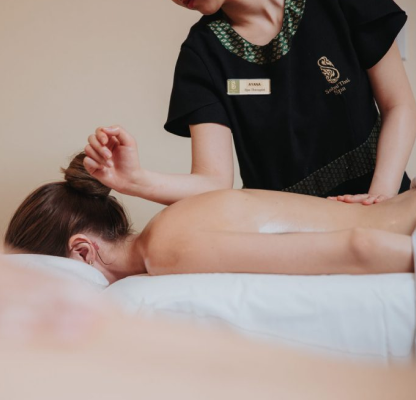

If you have ever searched “deep tissue massage” while dealing with a stiff neck or a nagging lower back, you already know the term but maybe not exactly what it means, or how to find the right treatment to match it.
This guide breaks down what deep tissue massage actually is, the benefits it offers, and how customers can experience it at Sabai Thai Spa.
What Is Deep Tissue Massage?
Deep tissue massage is a technique, not a single named service. It uses slow strokes and firm, sustained pressure to reach the deeper layers of muscle and the connective tissue surrounding them, called fascia.
Unlike a lighter, relaxation-focused massage, deep tissue work is designed to release chronic tension, break up adhesions, and address specific problem areas rather than smoothing over the whole body at a gentle pace.
Therapists trained in deep tissue technique often use their forearms, elbows, or knuckles to apply targeted pressure, and they may ask you to breathe into certain areas or shift position slightly so they can work a muscle group more directly.
It is common to feel some discomfort during the session, especially over particularly tight areas, but it should never cross into sharp pain.
Benefits of Deep Tissue Massage
Customers turn to deep tissue technique for a range of reasons, including:
- Pain relief. Sustained pressure can help release muscle knots and chronic tightness that lighter massage may not fully reach.
- Improved mobility. Working through fascia and connective tissue can restore range of motion in stiff joints and muscle groups.
- Reduced muscle tension. Especially helpful for tension that builds up from repetitive movement, poor posture, or high stress.
- Better posture. Releasing tightness in the neck, shoulders, and back can make it easier to hold a more natural, upright posture.
- Support for injury recovery. Many customers use deep tissue technique alongside other treatment to recover from strains, overuse injuries, or post-workout soreness.
Deep Tissue vs. Swedish Massage
The easiest way to understand deep tissue massage is to compare it to Swedish massage, the more familiar, relaxation-oriented style most people picture first.
Swedish massage uses lighter, flowing strokes designed to improve circulation and promote overall relaxation.
Deep tissue massage uses slower, firmer strokes aimed at specific areas of chronic tension or pain.
Neither style is “better.” Swedish massage is often the right choice when the goal is general stress relief and relaxation, while deep tissue technique is better suited to customers managing ongoing pain, tightness, or recovery from injury.
How Sabai Thai Spa Delivers a Deep Tissue Experience
Sabai Thai Spa does not offer a single service literally called “deep tissue massage.”
Instead, deep tissue style pressure and technique are built into two of our core services, so customers can choose the version that fits their needs.
Registered Massage Therapy
Registered Massage Therapy is the closest match to a clinical deep tissue treatment. Every RMT session begins with a consultation and assessment so your therapist can customize the treatment to your specific concerns, whether that is chronic pain, an injury, or ongoing muscle tension.
The treatment includes an oil massage designed to relieve stress, promote circulation, reduce pain and tension, treat injuries, and improve overall posture and range of motion.
RMT is a good fit for customers with extended health care benefits, since RMT services can typically be claimed on insurance depending on your individual plan, as well as customers seeking longer-term relief from chronic pain rather than a one-time relaxation session.
Thai Massage
Thai Massage offers a different route to a similar outcome. It combines acupressure, assisted stretching, and deep pressure work to facilitate deep relaxation while releasing tension from tight muscle groups.
Customers sometimes describe it as “yoga massage” because of the stretching component, which adds mobility benefits alongside the pressure work.
Thai Massage is a non-RMT service, which means it cannot be claimed on insurance, and it cannot be performed on customers who are or may be pregnant.
If You Want Something Different
Not every customer is looking for firm pressure. If you would rather ease into relaxation, Flow Massage blends Swedish and therapeutic technique into a gentler experience, Fusion Massage combines oil massage with assisted stretching and joint mobilization, and Reflexology focuses pressure on the hands, feet, neck, and shoulders through targeted acupressure points.
You can browse the full lineup on our massage services page.
Is Deep Tissue Massage Right for You?
A few quick questions can help you decide which service to book:
- Are you managing chronic pain or a specific injury, and do you have insurance coverage? Registered Massage Therapy is likely the better fit.
- Do you want deep pressure combined with stretching, in a non-RMT format? Thai Massage may suit you well.
- Is your goal general stress relief rather than working through a specific problem area? Consider Flow Massage or Fusion Massage instead.
If you are unsure, our front desk team and therapists can help you choose the right service when you book.
What to Expect at Your Appointment
For Registered Massage Therapy, plan for a first visit that includes about 10 to 20 minutes of consultation and assessment before the hands-on portion begins.
This step is required on your first visit only and helps your therapist understand your history and goals. For Thai Massage, your therapist will check in about pressure and any areas to avoid before starting.
During either treatment, speak up if pressure feels like too much. A good therapist will adjust in real time, and communication throughout the session is part of getting the most out of deep tissue technique.
Frequently Asked Questions
Is deep tissue massage covered by insurance?
Registered Massage Therapy is typically eligible for coverage under extended health care plans, though this depends on your individual policy. Thai Massage is a non-RMT service and cannot be claimed on insurance.
Does deep tissue massage hurt?
It can feel intense, especially over particularly tight muscles, but it should not cause sharp or lasting pain. Communicate with your therapist throughout the session so pressure can be adjusted to your comfort level.
How often should I get a deep tissue massage?
This depends on your goals. Customers managing chronic pain often benefit from a regular schedule, such as every few weeks, while others use it periodically to address specific tension as it arises.
What is the difference between deep tissue massage and Thai massage?
Deep tissue massage, delivered through Registered Massage Therapy at Sabai Thai Spa, focuses on sustained pressure to relieve pain and tension in specific areas, often for insurance-eligible treatment. Thai Massage combines similar deep pressure with assisted stretching in a traditional, non-RMT format.
Book Your Deep Tissue Style Massage
Whether you are managing chronic tension, recovering from an injury, or simply want a firmer, more targeted treatment, Sabai Thai Spa can help you find the right fit. Explore Registered Massage Therapy for a clinical, insurance-eligible option, or Thai Massage for a traditional deep pressure experience, and browse our full massage menu to see everything we offer.